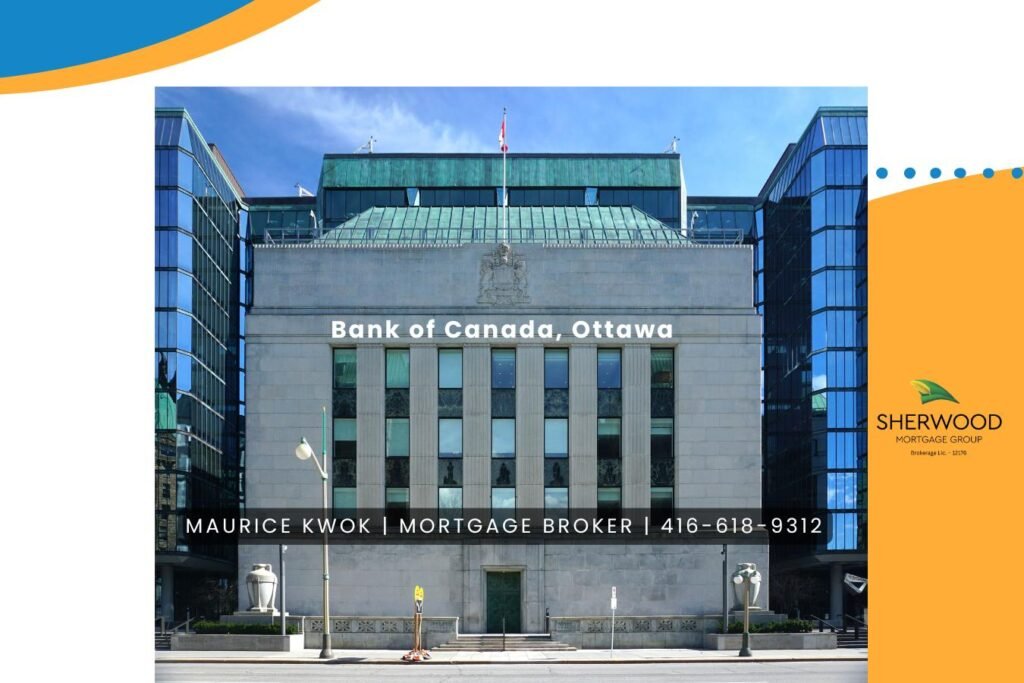
This morning, the Bank of Canada (BoC) announced its decision to maintain the policy interest rate at 2.25%. This marks a continued period of stability, but the accompanying Monetary Policy Report highlights a shifting economic landscape that every Ontario homeowner and buyer should understand.
As your local mortgage guide, I have synthesized the latest data from the Bank of Canada, CBC, and the Financial Post to help you navigate these updates.
The Economic Context: Why the “Hold”?
The Bank of Canada is currently walking a fine line between supporting economic growth and managing a new “inflationary bump.”
- Energy and Inflation: Conflict in the Middle East has driven global oil prices higher, causing headline inflation to hit 2.4% in March. The Bank anticipates inflation will peak near 3% this month (April) before gradually cooling.
- Trade Uncertainty: Ongoing uncertainty regarding U.S. trade policy and tariffs continues to act as a “drag” on the Canadian economy. This is a primary reason the Bank is keeping rates steady rather than raising them to combat the energy-driven inflation spike.
- GDP Resilience: The Bank now projects GDP growth of 1.2% for 2026. While modest, this resilience suggests that the “higher for longer” narrative remains the most likely path through the summer.
Current Ontario Mortgage Rates
Effective April 29, 2026 (rates are subject to change)
While the Bank of Canada’s policy rate directly impacts variable products, fixed-rate mortgages are driven by the bond market. Over the last two weeks, we have seen a minor upward “creep” in fixed rates as bond yields reacted to persistent inflation data.
5-Year Fixed (Insured) 4.39%
5-Year Fixed (Uninsured) 4.64%
3-Year Fixed (Insured) 4.22%
5-Year Variable (Insured) 3.70% (P-0.75%)
5-Year Variable (Uninsured) 3.99% (P-0.46%)
What This Means For You
- Variable Rate Holders: Your payments remain stable today. However, with the Bank remaining “nimble” to address energy costs, the prospect of rate cuts later this spring has diminished.
- Home Buyers: If you are shopping in the current market, securing a 120-day rate hold is a smart defensive move. This protects you from the recent volatility in the bond market while you find the right property.
- Renewing in 2026: If your mortgage is up for renewal this year, we should discuss short-term fixed options. This allows you to avoid locking in for five years while the market navigates this period of trade and energy uncertainty.
The Bottom Line: We are in a “wait and see” period. The next announcement on June 10, 2026, will be pivotal in determining if this inflation spike was a temporary blip or a longer-term trend.
Questions about your specific situation? Reach out today for a personalized strategy session to review your numbers.

Maurice Kwok ・ 郭澤文
Mortgage Broker, CPA, MBA ・ 粵語 ・ 國語
FSRA-licensed Mortgage Broker (Licence #M13000496)
Sherwood Mortgage Group (FSRA Brokerage Lic.#12176)
Your trusted mortgage guide since 1995.